
Africa’s growth story is no longer a future-tense conversation. It is already visible in the way businesses trade across borders, the way platforms expand into new markets, the way remittance flows continue to rise, and the way global companies now look at Africa as a serious growth corridor. The ambition is here. The demand is here. The customers are here. The harder question is whether the financial infrastructure behind that growth can move at the same speed.
For many businesses operating into, out of, or across Africa, the answer has often been complicated. Moving money across African markets can still mean patchwork providers, inconsistent local rails, delayed settlement, complex foreign exchange, liquidity constraints, and compliance requirements that change from market to market. These are not abstract problems. They shape how quickly a merchant gets paid, how reliably a platform can pay partners, how easily a fintech can expand, and how confidently an enterprise can serve customers in multiple countries.
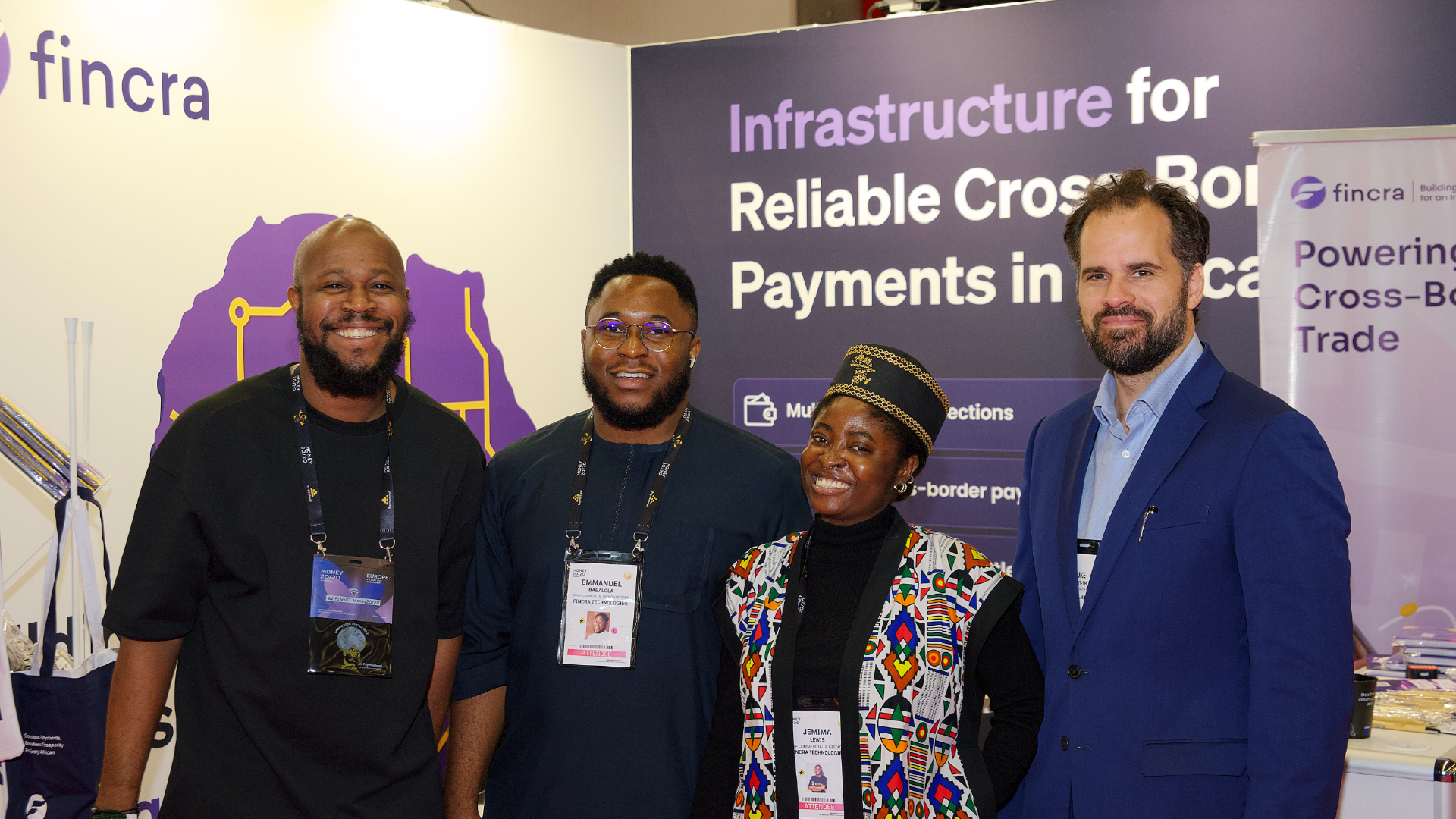
This was the central idea behind Fincra’s Money20/20 Europe fireside conversation, Modern Rails for Africa’s Economy. The conversation by Emmanuel Babalola, Chief Commercial Officer and Jemima Lewis, SVP Commercial, moved beyond payment buzzwords to a more practical question: what does it really take to build the rails that power African commerce across borders?
Africa’s payment challenge is an infrastructure challenge
One of the clearest takeaways from the conversation is that Africa’s cross-border payment problem is not a demand problem. Businesses already want to collect from African customers, pay African suppliers, enter new African markets, serve cross-border customers, and connect African commerce to global opportunities. What often slows them down is the infrastructure underneath.
The continent is frequently described as one market, but businesses that operate across Africa know this framing is misleading. Nigeria, Ghana, Kenya, South Africa, Zambia, Uganda, Tanzania, Rwanda, Cameroon and other markets all have different payment behaviours, regulatory expectations, settlement realities, customer preferences, currencies, and operational constraints. A payment method that works well in one market may not be enough in another. A settlement process that feels simple in one corridor may become complex in the next.
This is why generic access is not enough. Modern payment infrastructure for Africa must be corridor-aware. It must understand local collections, local payouts, FX, liquidity, licensing, reconciliation, settlement, compliance, and the everyday realities of moving money across markets that are connected but not identical.
From roads to rails: building the highways for African commerce
If Africa’s businesses are the vehicles of growth, payment infrastructure is the road network that determines how far and how fast they can move. For too long, many businesses have had to drive on broken roads: multiple providers, manual reconciliation, slow settlement, unclear fees, failed transactions, and limited visibility into where money is at any point in the journey.
Fincra is building a different kind of network. Its role is to provide the modern rails – or, more fittingly, the highways – that allow businesses to collect, pay out, convert, and settle across African markets with more reliability. This matters because payments are no longer only a finance function. For businesses expanding across Africa, payment infrastructure is a strategic growth decision. It affects customer experience, market entry, liquidity planning, revenue conversion, partner trust, and operational scale.
When a global platform wants to collect from customers in Ghana, pay vendors in Nigeria, settle in USD or GBP, or manage multi-currency flows across different African corridors, it does not only need a payment method. It needs an infrastructure stack that makes the movement of money predictable, compliant, and commercially usable.
What modern rails actually require
Modern rails are not one product. They are a connected stack of capabilities that work together. Collections allow businesses to receive payments from customers through preferred local methods. Payouts help businesses send money to bank accounts, wallets, suppliers, employees, contractors, and end-users. Virtual accounts create cleaner ways to receive and reconcile funds. FX enables businesses to manage currency conversion across corridors. Settlement determines how quickly and clearly money moves from one side of a transaction to another.
Each piece matters, but the real value comes when they work together. A business collecting in local currency needs to reconcile that transaction, convert where necessary, settle into the right currency, and pay out to the right beneficiary without building separate integrations for every market. That is the difference between offering payment access and offering payment infrastructure.
Fincra’s platform is designed around that infrastructure view. By giving businesses access to local and cross-border payment capabilities, multiple currency rails, virtual accounts, FX and settlement options through a unified platform, Fincra helps reduce the operational burden that typically comes with African expansion. Instead of forcing businesses to stitch together several providers, Fincra is working to make African payment operations feel more connected, more reliable, and easier to scale.
The true cost of fragmented infrastructure
Fragmented infrastructure costs businesses more than transaction fees. It costs them time, confidence, customer trust, working capital, operational clarity, and growth momentum. A delayed settlement can trap liquidity. A failed payout can damage customer experience. Poor reconciliation can overwhelm finance teams. Limited local coverage can force businesses to postpone market entry. Unclear compliance can create risk at the exact moment a company is trying to scale.
This is why the infrastructure conversation is so important. Businesses entering Africa are not only asking, ‘Can we accept payments?’ They are asking deeper questions: Can we collect like a local? Can we pay out reliably? Can we manage FX efficiently? Can we settle without unnecessary delays? Can we trust the rails? Can we expand into the next country without rebuilding our payment operations from scratch?
Fincra’s answer to these questions is to build for the complexity of the continent rather than pretend it does not exist. Africa’s payment future will not be powered by one rail alone. It will require interoperability between local payment methods, licensed infrastructure, banking partners, FX liquidity, compliance systems, virtual accounts, and emerging settlement layers.
Where stablecoins fit into the conversation
Stablecoins have become a major part of the global cross-border payments discussion, and Africa is no exception. But the strongest version of this conversation is not hype-led. It is practical. Stablecoins should not be treated as a magic replacement for every existing rail. Their value is clearer when they are seen as a complementary settlement layer that can help solve specific business problems around speed, transparency, liquidity movement, and cross-border settlement.
For businesses, the question is not whether stablecoins sound innovative. The question is where they create operational value. Can they help treasury teams move funds more flexibly across corridors? Can they support faster settlement where traditional flows are slow? Can they improve visibility for certain transaction types? Can they complement local rails rather than displace them?
Responsible adoption matters. Stablecoin-powered settlement must sit within a wider infrastructure framework that includes compliance, risk controls, regulatory awareness, customer suitability, and clear business use cases. In that sense, the future is not traditional rails versus stablecoin rails. The future is a more interoperable payment ecosystem where different rails do different jobs, and businesses can use the right rail for the right transaction.
Regulation as a trust layer
No serious conversation about modern African payment infrastructure can ignore regulation. Local licensing and regulatory coverage are not back-office details; they are trust layers. They determine whether businesses can operate confidently, whether customers are protected, whether partners can rely on the infrastructure, and whether growth can happen responsibly.
For a business entering a new African market, licensed coverage can reduce uncertainty. It signals that the infrastructure provider understands the local environment, has met relevant standards, and can support payment flows with more structure. This is especially important in cross-border B2B payments, where the stakes are not only transaction success but liquidity, compliance, reconciliation, reporting, and enterprise-grade reliability.
Fincra’s broader market presence and licensed coverage are therefore central to the value it offers. The goal is not simply to connect businesses to payment methods. The goal is to give them a more dependable way to operate across markets with local context, regulatory discipline, and technical infrastructure working together.
What global businesses should prioritise
For global businesses looking at Africa today, the first priority should not be speed alone. It should be infrastructure fit. Businesses need to ask whether their payment partner understands the markets they are entering, whether the provider can support both collections and payouts, whether FX and settlement are built into the operating model, whether local regulation is properly considered, and whether the infrastructure can scale beyond one market.
Africa’s opportunity is too large and too nuanced for shortcut thinking. A business may start with one country, but growth often creates the need to move across corridors. That is where the quality of the underlying rails becomes visible. Can the business move from Nigeria to Ghana, Ghana to Kenya, Kenya to South Africa, or Africa to global settlement flows without rebuilding everything each time?
This is the infrastructure problem Fincra is working to solve. By helping businesses move money into, out of, and across Africa, Fincra is not only simplifying payments. It is helping build the commercial highways that connect African businesses to customers, partners, suppliers, platforms, and opportunities across the continent and beyond.
The next decade of African commerce
The future of money movement in Africa will be defined by businesses that expect more from infrastructure. They will expect local relevance and global reach. They will expect speed without sacrificing trust. They will expect payment systems that support growth rather than slow it down. They will expect their infrastructure partners to understand that Africa is not one market, but a continent of corridors.
Modern rails for Africa’s economy must therefore do more than process transactions. They must connect markets. They must reduce friction. They must improve reliability. They must support compliance. They must make it easier for businesses to collect from customers, pay partners, manage currencies, settle funds, and scale with confidence.
That is the work Fincra is doing: building the payment highways for African commerce. Not as an abstract vision, but as practical infrastructure for businesses that already move across borders and need the rails to keep up.
Africa’s growth story is already being written. The next chapter will depend on how well money moves. And for businesses building into, out of, and across the continent, the winners will be those who choose infrastructure built for the road ahead.