

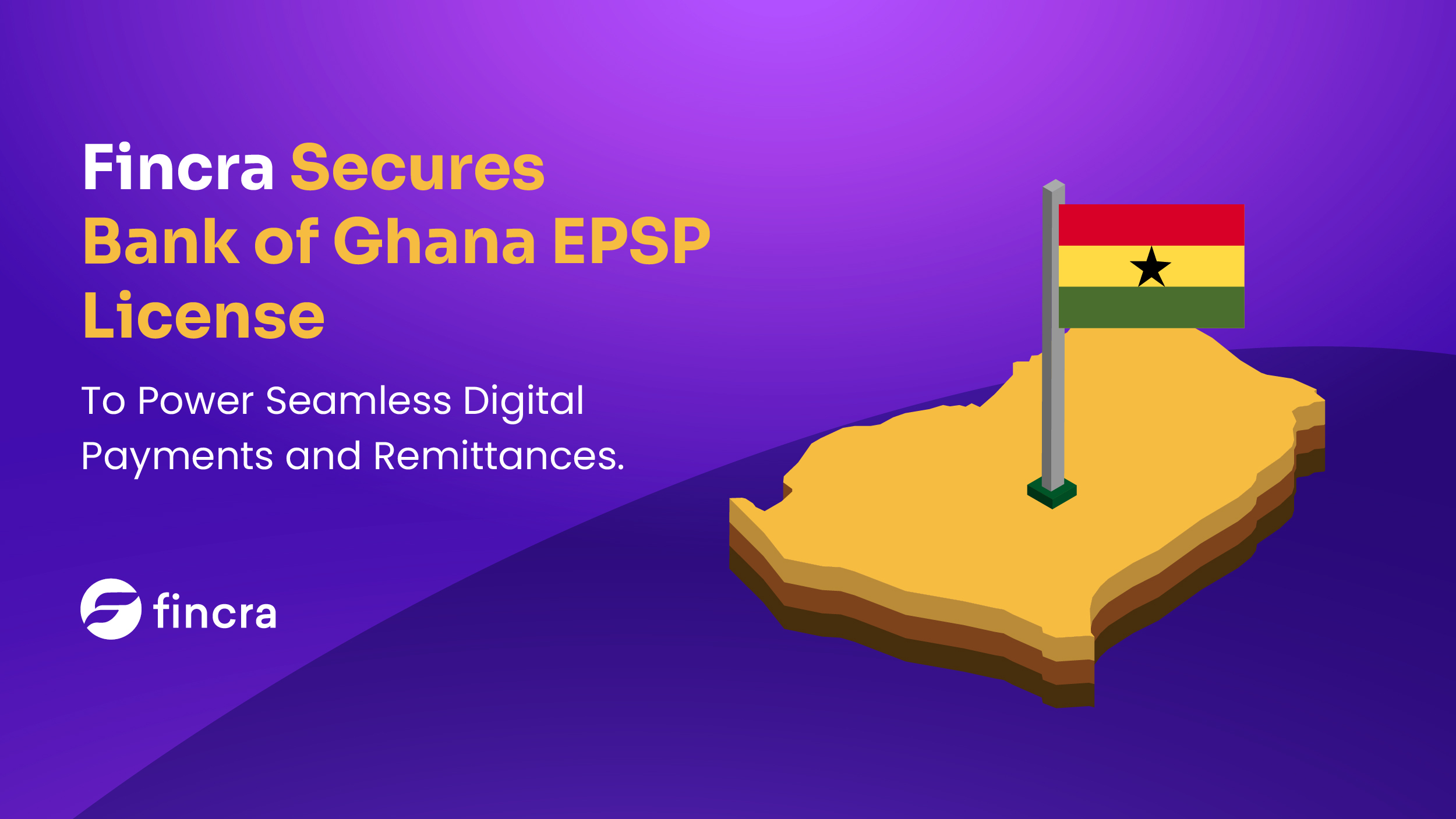
Fincra has secured an Enhanced Payment Service Provider (EPSP) license from the Bank of Ghana. This is the operating authority that allows Fincra to run regulated payment services directly inside Ghana, without depending on a local intermediary as the licensed party.
For Fincra’s customers, this means Ghana is no longer a corridor that requires patchwork integrations or third-party rails. It becomes a fully supported market with direct local presence, regulatory clarity, and infrastructure-grade reliability.
For the wider ecosystem, especially fintechs, ICPs, B2B platforms, and PSPs expanding into West Africa, this is the regulatory step that turns Ghana from a difficult market into an integrated one.
Here is what the license unlocks, and why it matters.
What an EPSP License Actually Authorises
The Bank of Ghana’s EPSP framework governs how regulated payment entities can operate inside Ghana’s financial ecosystem. It is not a workaround license, and it is not a partner-of-a-partner setup. It is direct authorisation to operate as a regulated payments entity within the country.
For Fincra, the license confers three operational rights:
- The ability to provide payment aggregation services to merchants and businesses operating in Ghana.
- The ability to facilitate inbound remittances into Ghana, terminating funds directly into local accounts and mobile wallets.
- The ability to enable digital collections from consumers across mobile money and bank channels, with full local settlement.
These are not promotional capabilities. They are regulated functions that, until now, required either a local partner holding the license or a structurally limited integration. With the EPSP authorisation, Fincra performs them directly.
The Three Services This Unlocks
1. Local Payment Collections
Businesses operating in Ghana, whether locally incorporated or serving Ghanaian customers from abroad, can now collect payments through Fincra’s API using the channels customers actually use.
That includes mobile money (MTN MoMo, Telecel, AT) and bank transfers across all licensed banks. Funds settle into a single Fincra account that can be withdrawn or routed for downstream use.
The practical effect is that businesses no longer need to maintain multiple local payment relationships, reconcile across separate dashboards, or rely on workarounds to accept domestic payments. One Fincra integration covers the full Ghanaian collections stack.
2. Inbound Remittances into Ghana
Ghana receives a significant volume of international remittances each year, and the operational quality of those transfers depends on how cleanly funds terminate locally. With the EPSP license, Fincra can facilitate inbound remittances directly into Ghana, settling into bank accounts and mobile wallets without intermediation.
For remittance operators, this means cleaner execution, faster delivery into recipient’s hands, and a more predictable terminating leg. For end users, it means the money arrives where it should, in the form they expect, without delays caused by intermediary handoffs.
3. B2B Payment Aggregation
Beyond consumer-facing collections, Fincra can now operate as a payment aggregator for B2B flows inside Ghana. Marketplaces, platforms, payroll operators, and businesses that pay or get paid by Ghanaian counterparties can route those flows through Fincra under regulated authority.
This matters because B2B flows often carry the largest individual transaction values and the highest reconciliation complexity. Doing them through a regulated aggregator removes operational friction and gives both sides regulatory comfort.
Why Ghana, and Why Now
Ghana is one of West Africa’s most strategically important payments markets. Mobile money penetration is high, bank rails are functional, and the Bank of Ghana has built one of the more structured regulatory environments on the continent. For payment infrastructure providers, Ghana is not a market you enter casually. It is a market you enter properly, under license.
Fincra’s decision to pursue and secure the EPSP license reflects a clear posture: the company operates as licensed infrastructure in the markets it serves, not as a layer sitting on top of someone else’s authorisation.
“Ghana represents one of the most active payments environments in West Africa, with strong mobile money adoption, growing remittance inflows, and a forward-leaning regulator. Securing the EPSP license is a clear signal of how seriously we take this market. It allows us to plug Ghanaian businesses, fintechs, and remittance partners directly into the same infrastructure that already powers Fincra in other parts of West Africa, East Africa, South Africa, and across our other operating markets, under proper local authorization.” Wole Ayodele, CEO, Fincra
What This Adds to Fincra’s West Africa Position
Fincra already operates across more than 20 African markets, with payment networks active in Africa, Europe, and North America. Ghana adds regulatory depth to a footprint that was already commercial.
For customers, that means the same single Fincra API integration that powers payments in other key African corridors now extends into Ghana, with full local authorisation behind it. For ICPs in remittances, B2B payments, e-commerce, and global payroll, the integration cost of expanding into Ghana drops to near-zero.
This is what enterprise-grade infrastructure looks like in practice: regulatory standing in each market, one technical integration, and consistent operational reliability across corridors.
How to Get Started
Ghana payments via Fincra are now live. Developers can access the sandbox environment and full API documentation immediately, while commercial teams can engage Fincra directly for tailored integration support, pricing, and onboarding.
For businesses already running on Fincra in other markets, Ghana is a configuration step within the same integration. For new customers, Ghana can be the starting point for a broader Africa payments setup. Visit fincra.com to get started.

Simply wanna input on few general things, The website pattern is perfect, the content is rattling good. “The reason there are two senators for each state is so that one can be the designated driver.” by Jay Leno.